Proudly serving Tuscaloosa
Siding Installation Cost Tuscaloosa
- Built for Alabama storms
- Serving Tuscaloosa County
- Upfront, no-surprise pricing
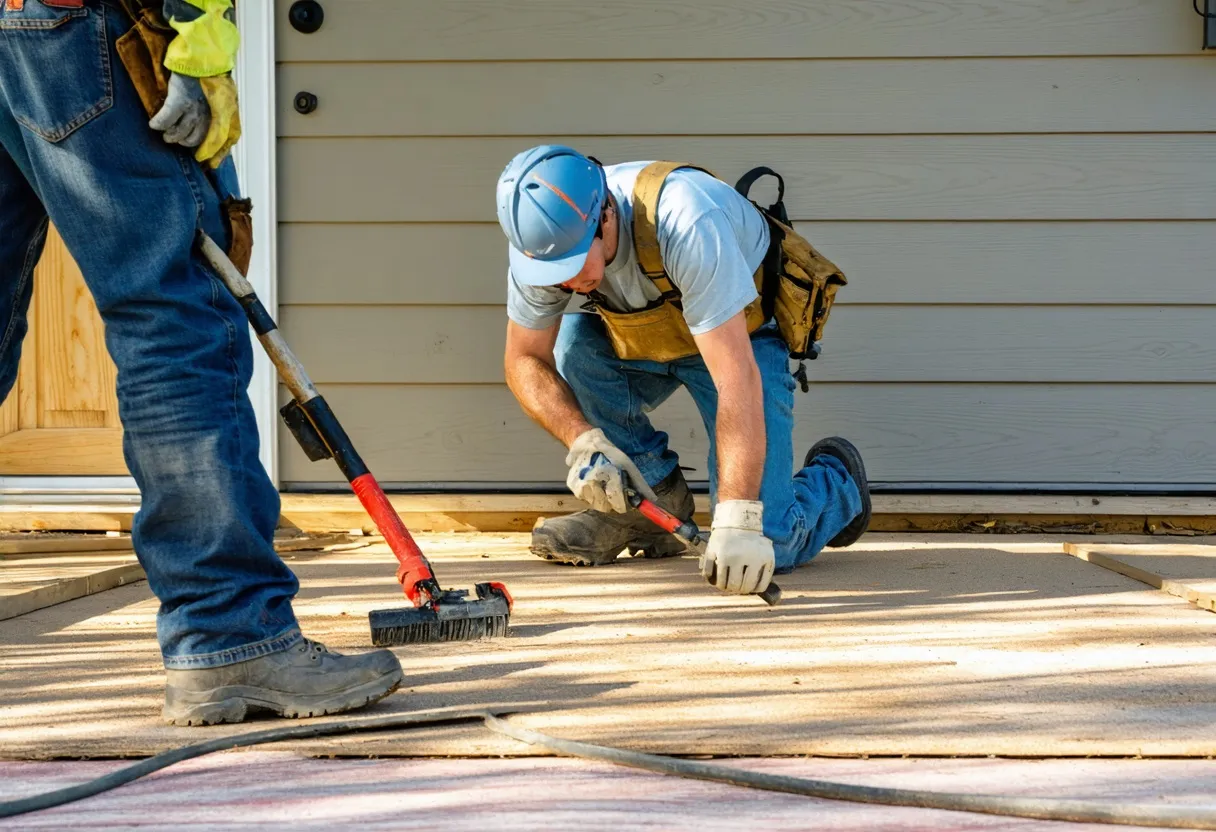
Siding installation cost in Tuscaloosa typically lands between $8,500 and $22,000 for an average single-story home, and the size of that range isn't a hedge — it's the real distance between two genuinely different jobs. A 1,600-square-foot ranch near Cottondale getting re-sided in vinyl over sound sheathing is not the same project as a two-story home near North River getting fiber cement installed over walls where storm-driven moisture has already compromised the OSB underneath. Both fall under "siding installation," and both price out completely differently once someone actually measures the walls.
What makes pricing here different from a national average isn't just Southern humidity — it's that Tuscaloosa County sits inside a genuine severe-storm corridor, and that reality is written into local permit codes governing fastening patterns, wind ratings, and moisture barriers. A contractor who prices to that standard by default is quoting a different job than one pricing to a generic national spec sheet and treating wind-load fastening as an upgrade. Neither quote is dishonest on its face, but only one of them is priced for what actually happens here when a summer storm rolls through Northport, Alberta City, or anywhere else in the county.
This page exists to take the mystery out of that number before you're standing in your driveway comparing two bids that look nothing alike. Below: what actually moves the price line by line, real per-square-foot ranges by material, how a quote gets built from first measurement to final invoice, what financing structures are commonly available, and the questions worth asking before you sign anything.
What Actually Moves the Price: Cost Drivers and Per-Square-Foot Ranges
Siding is quoted per square foot of wall area, but the number on a flyer or a national site rarely survives contact with your actual house. Material is the single biggest lever — it alone can swing a total project cost by $8,000 to $15,000 on an identical footprint — but several other factors move the final number just as much once a crew is standing at your door with a tape measure.
- Home shape and trim density: A simple rectangular ranch installs faster per square foot than a home with dormers, bump-outs, multiple gables, or heavy trim detail, because labor time scales with the complexity of the wall, not just its square footage. Two homes with identical total wall area can land thousands apart once one of them has three times the corners and window trim of the other.
- What's actually under the old siding: This is where a quote most often changes after work has already started. Once old siding comes off, rotted OSB, water-stained plywood, or insect damage sometimes surfaces — and in a county that sees the humidity and storm exposure Tuscaloosa does, that discovery is common enough to be priced as a contingency from day one, not treated as a surprise.
- Removal and disposal of existing material: Stripping old aluminum, wood, or a failed vinyl install adds labor hours and dump fees that a straight "install-over-existing" quote simply won't reflect, which is one reason two bids for the "same" job can differ by thousands.
- Story count and access: Two-story walls require staging or lift equipment and a more deliberate safety setup than a single story, and that added labor time shows up in the total regardless of which material you choose.
- Trim, corners, and accessories: J-channel, corner posts, window and door trim, and soffit and fascia work are frequently priced apart from flat wall area, and omitting them from an initial estimate is a common way a low bid gets revised upward later.
- Insulation and moisture-barrier upgrades: Adding rigid foam backer board or an upgraded house wrap under new siding costs more upfront, but in a market with Tuscaloosa's humidity swings, it's a real performance consideration and not simply an upsell line item.
- Permit and code requirements: Tuscaloosa County jurisdictions enforce fastening patterns, wind ratings, and moisture-barrier specifics, and a contractor who builds those into the original quote is pricing the job you'll actually get built, rather than a generic install that gets revised once the permit reviewer sends it back.
Here's how those factors translate into installed price per square foot — material, labor, and standard prep together, not material cost alone:
- Vinyl siding: roughly $4–$9 per square foot installed, the most budget-friendly entry point for a full re-side.
- Engineered wood siding: roughly $6–$11 per square foot installed, priced between vinyl and fiber cement.
- Fiber cement siding, including James Hardie products: roughly $8–$14 per square foot installed, reflecting both material cost and the more specialized cutting and fastening technique it requires.
- Polymer and composite panels: roughly $9–$16 per square foot installed, depending on panel style and thickness.
- Metal siding (steel or aluminum): roughly $10–$18 per square foot installed, with steel typically running above aluminum due to weight and gauge.
A straightforward single-story vinyl job on a simple footprint lands at the low end of its range. A two-story fiber cement install with extensive trim work and sheathing repair lands at the high end of its range, or above it. If you're still weighing which material fits your budget against its long-term performance rather than just comparing sticker prices, that lifespan-and-maintenance tradeoff deserves its own honest look before you commit to a number.
How a Real Quote Gets Built, Not Guessed At
A crew measures actual wall square footage, photographs the existing siding's condition, and flags soft spots, staining, or gaps that suggest moisture is already working behind the wall before a number gets written down.
Material, labor, tear-off and disposal, trim work, and a sheathing-repair contingency are broken out as separate line items rather than folded into one flat total, so you can see exactly what you're paying for.
Because Tuscaloosa County jurisdictions enforce specific wind-load and moisture-barrier requirements, the quote reflects what your permit will actually require rather than a generic national install spec.
If sheathing repair turns out to be needed once old siding comes off, that cost is drawn from the contingency already disclosed in writing, not introduced afterward as a change order.
The crew walks the finished exterior with you against the original itemized quote to confirm the work matches what was agreed before any final payment changes hands.
What Should Already Be in Writing Before You Sign
Siding Financing in Tuscaloosa: What the Payment Structures Actually Mean
A full re-side is a five-figure investment for most Tuscaloosa homes, and financing is a normal part of that conversation for most homeowners — not a fallback for people who can't otherwise afford the work. The structures worth understanding before you commit to a material or a contractor generally fall into four categories, and they behave very differently once you look past the monthly payment number.
- Fixed monthly payment plans through a financing partner spread the total project cost over a set term at a predictable, unchanging payment — useful if you want to budget against a known number rather than a variable one.
- Deferred-interest promotional plans charge no interest at all if the full balance is paid off within a promotional window, which can make sense if you're waiting on an insurance payout, a bonus, or a specific paycheck cycle rather than planning to carry the balance long-term. The risk is that missing the window can trigger retroactive interest on the full original balance, so the payoff date matters as much as the promotional rate.
- Insurance-assisted payment structures apply specifically to storm damage repair or replacement claims, where the contractor coordinates documentation — photos, damage assessment, scope of work — with your insurer, and payment timing follows the claim process rather than a standard project invoice schedule.
- Traditional home equity or personal loan financing, arranged independently through your own bank or credit union rather than through the contractor, often offers more negotiating room on rate and term, though it typically takes longer to close than in-house financing.
The number that actually matters isn't the monthly payment advertised on a flyer — it's the total interest paid across the full term, whether a prepayment penalty applies if you pay the balance off early, and whether the rate is fixed for the entire term or adjusts once a promotional period ends. Ask any contractor offering in-house financing for the annual percentage rate in writing before you sign anything. A legitimate financing partner produces that number without hesitation; a vague or delayed answer is itself worth paying attention to.
If your project is tied to storm damage rather than a planned upgrade, ask specifically how the financing partner or contractor coordinates timing with an insurance claim, since a claim payout and a project start date don't always land on the same calendar. A contractor who has actually done this before should be able to walk you through that timing without improvising — it's a routine question in a market where storm damage claims are a regular part of the business, not an edge case.
Whichever structure you're considering, get the full term sheet before comparing it against a competing bid's cash price. A low monthly payment on a longer term can end up costing more in total interest than a higher payment on a shorter one, and that comparison is impossible to make from the monthly number alone.
Built to Hold Against Tuscaloosa County's Storm Pattern
Every number on this page assumes fastening spaced to manufacturer wind-load specification, correctly lapped and taped house wrap, and flashing detailed at every window, door, and penetration — the difference between siding that survives a straight-line wind event and siding that doesn't. That standard is the baseline built into every quote here, not an optional upgrade line.
Siding Installation Cost Questions Tuscaloosa Homeowners Ask
Why is the price range so wide for the same size home?
Because two homes of identical square footage rarely need the same work. Material choice alone can shift a total by thousands of dollars, and factors like trim complexity, story count, and the condition of the sheathing once old siding comes off routinely account for the rest of the spread.
Does price per square foot include tear-off and trim?
It depends on how a contractor quotes it. The per-square-foot ranges above reflect installed pricing — material, labor, and standard prep — but tear-off, disposal, and trim work are commonly itemized separately, which is exactly why two quotes for what sounds like the same job can look very different.
Will storm-aware installation cost more than a standard install?
Building to manufacturer wind-load specification and proper flashing detail is the standard every quote here is built around, not an optional add-on, so it's priced into the number from the start rather than tacked on later. What tends to cost more is skipping it and paying for repair after the next storm season.
How long before I get an actual price instead of just a range?
An on-site measurement and visual assessment typically produces an itemized written quote the same visit or shortly after. The range narrows fast once someone has actually seen your walls, your trim detail, and the visible condition of your existing siding.
Can financing cover a project that's also an insurance claim?
Yes, though the payment structure differs from standard financing. Insurance-assisted arrangements coordinate documentation and payment timing with your claim rather than following a fixed monthly schedule, so it's worth asking about specifically if storm damage is part of what you're addressing.
What's the single biggest reason a final invoice differs from the original quote?
Sheathing condition discovered during tear-off. It's the most common source of a price change on any siding job, which is why an honest contractor prices a repair contingency into the original written quote instead of treating it as a surprise.
Get Your Free Quote
Tell us about your home and we'll follow up with clear pricing and options.
More siding installation services
Ready to Talk Siding?
Reach out for a free, no-obligation quote on your project.