Proudly serving Tuscaloosa
Siding Replacement Tuscaloosa
- Built for Alabama storms
- Serving Tuscaloosa County
- Upfront, no-surprise pricing
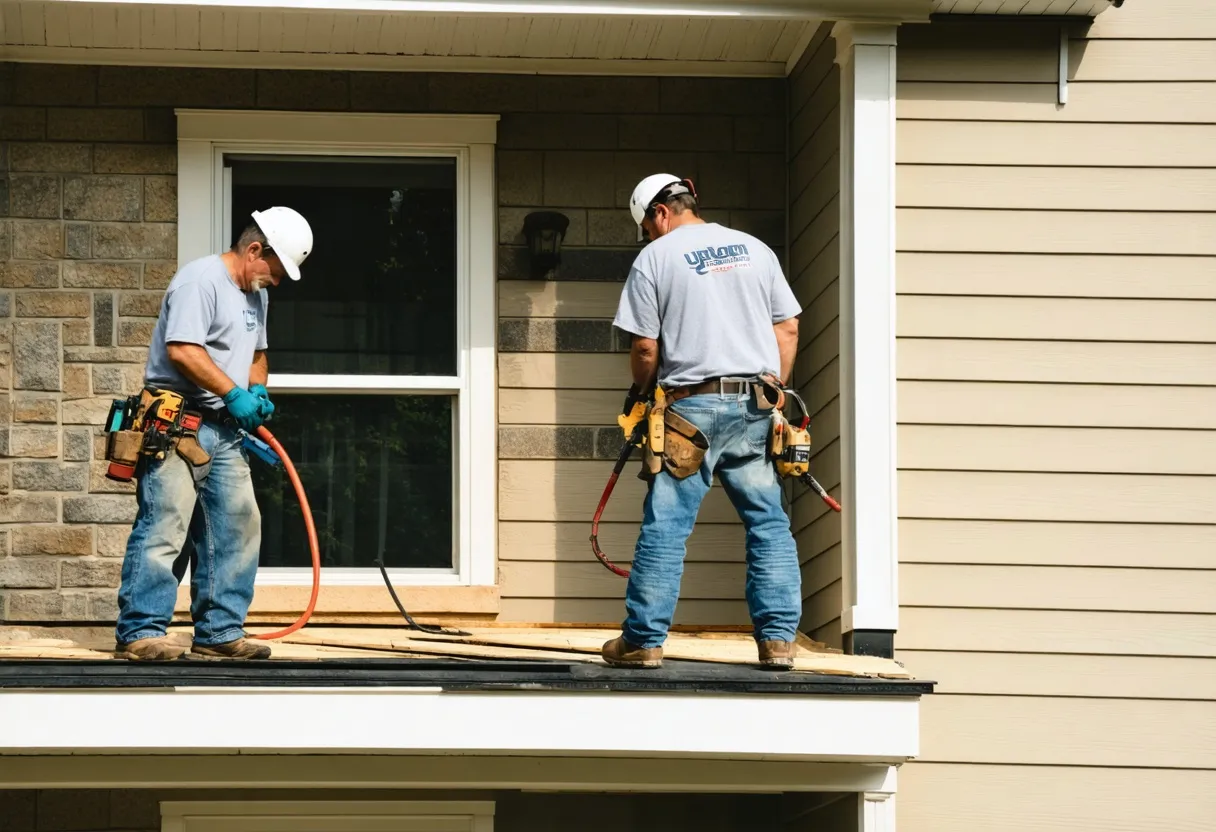
Tuscaloosa County sits inside the stretch of the Southeast that meteorologists have long called Dixie Alley — a region where severe thunderstorms, straight-line wind events, and tornado warnings are simply part of spring and summer rather than a rare occurrence. When wind-driven rain hits a home here, siding is the wall assembly's first and often only line of defense between that weather and the sheathing, insulation, and framing sitting behind it. Siding replacement in Tuscaloosa done right isn't just a cosmetic refresh — it's a decision about how your home's exterior will actually perform the next time a line of storms rolls through, and it should come with pricing you can read and understand line by line before a crew ever shows up.
This page is built around that reality rather than a generic sales pitch. We walk through what wind-aware installation practices actually look like on a Tuscaloosa County home, how we price a replacement in plain, itemized terms instead of a lump-sum guess, what changes once your existing siding is old enough that patching stops making financial sense, and how documentation supports an insurance siding replacement claim when a storm — not simple age — is the reason you're replacing. If you're comparing quotes right now, the details below should also work as a checklist for evaluating whatever number another contractor hands you, because the gap between a durable installation and one that fails in the next storm season is almost never visible on the surface. It shows up in the fastening pattern, the flashing detail, and the sheathing underneath — the parts of the job that get covered up as soon as the new panels go on.
Old Siding Replacement Tuscaloosa: When Patching Stops Making Sense
How a Wind-Aware Siding Replacement Actually Gets Installed
We walk every elevation of your home, checking not just visible wear but which walls take the most direct wind-driven rain given your home's orientation, roofline, and how much tree cover you have, since that exposure should shape material and fastening decisions rather than being an afterthought.
You receive a written breakdown that separates material cost, labor, tear-off and disposal, a sheathing repair contingency, and permit fees into their own distinct lines, so nothing about the final total is left to guesswork, a bundled lump sum, or a verbal promise.
Old siding comes off first so any rot or moisture damage hiding in the sheathing behind it gets repaired before anything new goes up, and the weather barrier goes on with the overlaps and sealed seams it actually needs in order to work as designed.
Panels, trim, and flashing go on following manufacturer fastening patterns and expansion allowances suited to this area's wind exposure, with tighter attention on gable ends and corners, then we walk the finished job with you against the original itemized estimate line by line.
The Installation Details That Actually Resist Alabama Wind
Every siding product ships with a manufacturer spec for fastener spacing, nail penetration depth, and expansion gap width — the room panels need to move slightly as temperatures swing through a Tuscaloosa summer without buckling or popping loose. Those numbers aren't a suggestion; they're the difference between siding that stays put through a strong wind gust and siding that peels off in sheets during the next line of storms. We follow manufacturer spec as a floor, not a ceiling, and on more wind-exposed elevations — corners, gable ends, and walls facing open ground with less tree buffer — that can mean tighter fastener spacing than the published minimum allows.
Corner posts, J-channel, and starter strips get the same level of attention as the field of the wall. A starter strip that's slightly out of level telegraphs through every course installed above it, and a corner post that isn't properly fastened is one of the first places wind gets a grip and starts working a panel loose from the bottom up. Flashing at window heads, door heads, and every roof-to-wall intersection matters just as much as the siding material itself, because these are the transition points where wind-driven rain finds its way behind even a well-installed wall system if the flashing detail was rushed or skipped entirely. We install flashing at each of these intersections as a standard part of the project scope — not an optional upsell added to the estimate later.
Material also changes how that fastening plays out. Vinyl panels need room to expand and contract as temperatures swing between a Tuscaloosa summer afternoon and a winter cold snap, so fasteners are set to allow that movement rather than pinned tight — over-driving a nail into vinyl is a common shortcut that looks fine on install day and causes buckling within a year or two. Fiber cement behaves differently: it's heavier, doesn't expand the same way, and calls for its own fastening schedule and blade-specific cutting to avoid cracking the board at the edges. Getting either one wrong rarely shows up immediately — it shows up the first time wind and a real temperature swing test the installation together.
Why This Matters More in a Tornado-Corridor County
None of this is exotic — it's baseline good practice that any competent installer should already know. What changes in Tuscaloosa County is how often that baseline actually gets tested. A wall assembly that's slightly under-fastened might go years without an obvious problem in a milder, calmer climate. Here, where straight-line wind events and severe thunderstorms are a normal part of the spring and summer calendar rather than an occasional surprise, the gap between "installed to manufacturer spec" and "installed to whatever passes a quick visual inspection" tends to show up faster — sometimes in the very next storm season rather than years down the road.
Storm Damage? Document It Before You Patch It
If wind or hail is the reason your siding needs attention, resist the urge to patch it quietly and move on without a record. A photo-documented, itemized estimate taken before any repair work begins gives you something concrete to bring to an insurance conversation, and having that record on file costs you nothing even if you ultimately decide to wait on the work.
What Actually Drives Siding Replacement Cost in Tuscaloosa
Ask two siding contractors in Tuscaloosa for a quote on the same house, and you can end up with two very different numbers for what sounds like an identical scope of work. That gap almost never comes down to one contractor simply charging more — it comes down to what's actually included in the number, and what's been quietly left out of it.
- Material choice — vinyl, fiber cement, wood, and metal all sit at different price points, and within each category, impact-rated or insulated options cost more than a standard profile of the same material.
- Square footage and home shape — more exterior wall area means more material and labor, and a home with dormers, bump-outs, or heavy corner trim takes meaningfully longer to wrap correctly than a simple rectangular footprint of the same size.
- Tear-off complexity — multiple layers of old siding stacked on top of each other, or older wood siding with lead-based paint that requires careful handling and disposal, adds labor time that a quick phone estimate can't realistically account for.
- Substrate condition — hidden rot discovered once old siding comes off is the single most common source of change orders in this trade, which is exactly why a transparent estimate spells out a sheathing repair contingency up front instead of surprising you with it mid-project.
- Wind-rated fastening and additional flashing — homes on more exposed lots, or with a documented history of wind damage, sometimes benefit from tighter fastener spacing or extra flashing at vulnerable transitions, which adds modest labor cost but reduces callback risk after the next storm.
- Permit fees — Tuscaloosa County typically requires a permit for siding replacement, and that cost should appear as its own line item rather than being buried inside a general "labor" charge.
- Optional add-ons — gutter guards or an insulation upgrade added while scaffolding and site access are already in place, priced separately so you decide what actually fits your budget for this specific project.
Because these variables can swing a total significantly, we don't give ballpark numbers over the phone for a full replacement. An on-site assessment comes first, and the written estimate that follows breaks every one of the factors above into its own line, so you can see exactly what you're paying for — and compare it against another contractor's quote item by item instead of stacking two unexplained bottom-line numbers against each other.
A useful gut check when comparing quotes: ask each contractor to name their sheathing repair contingency, their permit line, and their tear-off scope separately, out loud, before you sign anything. A contractor who can answer immediately, in specific terms, has clearly priced the job that way from the start. One who has to go figure it out probably bundled those costs into a single number and is guessing at the breakdown after the fact — which is a preview of how change orders on the actual job are likely to go.
If a storm is the reason you're replacing rather than simple age, that same itemized, photo-documented estimate is typically also what an insurance adjuster wants to see when evaluating an insurance siding replacement claim. We can't promise what any specific policy will or won't cover — that's a conversation between you and your insurer — but a vague verbal quote gives an adjuster very little to work with, while a line-by-line breakdown tied to documented, dated damage gives your claim something concrete to evaluate against.
Siding Replacement Questions Tuscaloosa Homeowners Ask
How do I know if I need a repair or a full siding replacement?
If the damage is limited to one or two isolated spots — a cracked panel, a small hole, a section of failed caulking — a targeted repair is usually the right call and the more cost-effective one. If damage is spread across multiple walls, the sheathing underneath is compromised, or the siding is original and past the 20-25 year mark, full replacement tends to be the better long-term decision even though the upfront number is higher. An on-site assessment is the only reliable way to know which sit
Will insurance cover my siding replacement in Tuscaloosa?
That depends entirely on your specific policy and the documented cause of the damage — storm and wind events are typically treated very differently from gradual wear caused by age and weathering. We don't process claims ourselves, but we do provide the kind of photo-documented, itemized estimate that gives you and your adjuster something concrete and specific to work from when the damage is genuinely storm-related.
Do I need a permit to replace siding in Tuscaloosa County?
Generally yes. Tuscaloosa County typically requires a permit for siding replacement projects, and local code includes specific requirements around weather barriers and flashing given how much wind and storm exposure the area sees. Permit cost is called out as its own line item in the estimate rather than folded into labor, and we handle the application as a standard part of the project.
How long does a full siding replacement take?
Most single-family homes take anywhere from a few days to two weeks, depending on square footage, the material chosen, and how much sheathing repair turns up once the old siding actually comes off the wall. Active storm season can also affect scheduling around a project, since safe working conditions matter more than hitting an arbitrary deadline.
What happens if rotted sheathing turns up once old siding is removed?
This is common enough on older Tuscaloosa homes that a realistic estimate should plan for it up front rather than treat it as an unpleasant surprise. Our estimates include a sheathing repair contingency and a clear, pre-agreed process for what happens if hidden damage is found, so it becomes a known step rather than an open-ended change order mid-project.
What if my current siding is still under a manufacturer warranty?
Manufacturer material warranties are typically tied to the original installer and don't transfer cleanly if a different contractor performs the replacement, so it's worth checking your paperwork before assuming a warranty claim will cover the cost. We can help you understand what a warranty document is actually saying, but the manufacturer and original installer are the parties who make the final coverage determination.
Serving Tuscaloosa County's Storm Corridor
Severe weather in West Alabama doesn't stop at a city limit sign. A summer squall line or a tornado-warned supercell that damages siding in Tuscaloosa proper is often doing the same thing in Northport, Cottondale, and the North River area within the same afternoon, which is why coverage extends across Tuscaloosa County rather than being treated as a single-zip-code service.
Wherever you're located inside that area, the same wind-aware installation standard and the same itemized, plain-number estimate process apply — a homeowner in Cottondale gets the same sheathing-repair contingency language, the same fastening detail, and the same flashing standard as a homeowner in central Tuscaloosa. That consistency matters most in the window right after a storm, when several communities across the county can be assessing damage at the same time, and the difference between a fast, thorough estimate and a rushed guess tends to show up later — in whether the repair or replacement actually holds through the next weather system to come through.
That coverage also means we're positioned to respond across the county in the same stretch of days after a widespread storm event, rather than a single crew working through a long backlog city by city. If Northport and Tuscaloosa both take damage from the same storm system, both get the same assessment priority based on urgency, not distance from a single office.
If your home sits in Tuscaloosa, Northport, Cottondale, North River, or elsewhere in Tuscaloosa County and you're weighing a replacement — whether it's storm-driven, age-driven, or you're simply planning ahead of the next severe weather season — the next step is the same regardless of address: an on-site assessment and a written, itemized estimate you can actually read line by line before any work begins.
Get Your Free Quote
Tell us about your home and we'll follow up with clear pricing and options.
Ready to Talk Siding?
Reach out for a free, no-obligation quote on your project.